It (likely) earned an Elite classification with 2x greater AI capability, a 30% smaller footprint, and integrated micro-power Wi-Fi 6E.
Sep 23, 2026
Citibank Korea has tapped Kim Kyoung-ho, its head of corporate banking, as its next CEO, marking the lender’s first leadership change in six years, the bank said Wednesday. The bank’s executive recommendation committee named Kim as the sole finalist at a meeting, Tuesday. If approved by the board and shareholders, he will succeed Yoo Myung-soon, who has led Citi since 2020 as its first female CEO. Her term expires Oct. 27. The committee described Kim as “a corporate banking expert with extensive experience serving large corporations and financial institutions,” citing his track record, deep knowledge of client relationships and the Korean market, as well as his understanding of risk management and internal controls. Kim joined Citibank Korea in 2001 and has held a series of senior roles in corporate banking, including large corporate banking and financial institutions coverage, before being promoted to an executive vice president in 2021. His appointment comes as Citi continues to reshape its Korean business following its exit from consumer banking. With corporate clients now at
With the terms of 54 top executives at major financial holding companies’ affiliates set to expire at the end of the year, including the CEOs of all five major commercial banks, the government is stepping up pressure on financial groups to make their leadership succession more transparent and address any procedural shortcomings, according to industry officials Wednesday. Financial Supervisory Service (FSS) Gov. Lee Chan-jin made the call at a meeting with the chairmen of eight financial groups — KB, Shinhan, Hana, Woori, NH NongHyup, iM, BNK and JB — at his agency's headquarters in Seoul, Wednesday. CEO appointments at their subsidiaries, Lee said, should be “a transparent and fair process for identifying the right candidates based on their capabilities, without being swayed by particular factions or personal relationships.” Holding companies that still lack what the FSS considers basic safeguards, including clearly defined qualifications for the top job and a minimum period for assessing candidates at each stage, should address those gaps before launching their appointment pr
As Korea confirmed a natural gas-fired combined-cycle power plant in Encinal, Texas, will be the first project under its $200 billion strategic investment commitment to the United States, power purchase agreements (PPAs) with potential power buyers are emerging as a key factor in determining the project’s commercial viability. In a National Assembly briefing on Tuesday, Industry Minister Kim Jung-kwan said the project will be worth $22.3 billion, with planned generating capacity reaching 6.3 gigawatts. The project will initially build a 1.4-gigawatt gas turbine power plant to assess actual demand and economic viability, before gradually expanding it with 4.9 gigawatts of more efficient combined-cycle generation capacity. The project will be funded entirely by Korea, while ownership will be split equally between Seoul and Washington. Electricity generated from the plant is expected to power artificial intelligence (AI) data centers in the region. In selecting the gas plant as the first project, the government considered “commercial reasonableness,” stipulated as a key condition in
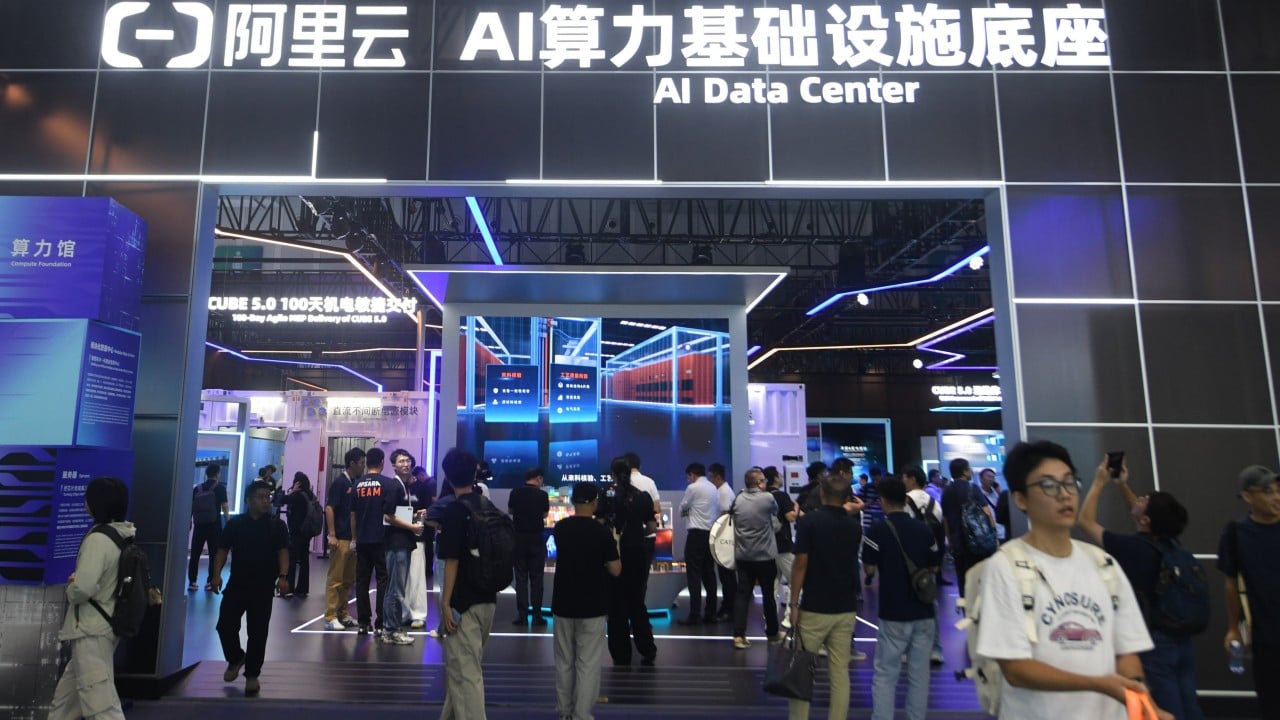
Alibaba Cloud, Alibaba Group Holding’s cloud business unit, is set to launch data centres in Turkey, Finland and the Netherlands over the next 12 months, speeding up an overseas push as it seeks to win enterprise customers through its “full stack AI capabilities” spanning chips, cloud infrastructure and multimodal models. The first of these new data centres will open in the Netherlands in October. The cloud unit will also add to existing data centre capacity in Malaysia, Germany, the United Arab...
As part of OPPO’s new Find X10 series, the Find X10 Pro Max will be joined by the more affordable Find X10 and Find X10E.
Sep 22, 2026
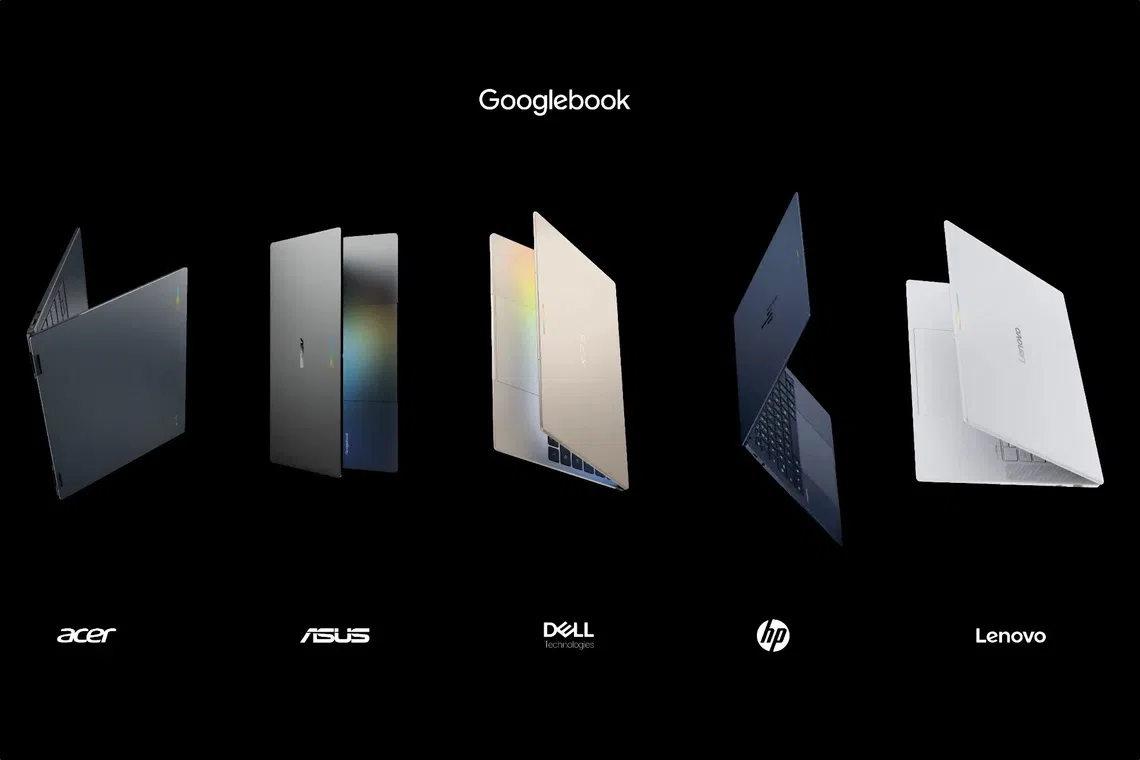
Android phone users, these laptops were designed specifically for you.
Korea’s low-cost carrier (LCC) industry is heading for a major shakeup, as VIG Partners moves to acquire Air Premia, seeking synergies by combining the long-haul-focused carrier with its existing Eastar Jet, which has a stronger presence on short-haul routes. VIG is reportedly in negotiations with AP Holdings and Tire Bank to acquire about 70 percent of Air Premia, with the transaction valued at around 300 billion won ($217 million). The potential deal would mark VIG’s second major move in Korea’s LCC industry since it acquired Eastar Jet in 2023. The latest move would give the private equity firm access to two airlines with distinctly different route strategies: Eastar has focused largely on short- and medium-haul routes, while Air Premia has built its business around long-haul services, including flights particularly to the United States. The combination could therefore offer a way to build scale across a broader network, rather than simply adding another airline to VIG’s portfolio. Eastar Jet and Air Premia generated combined sales of about 1.21 trillion won last year, accordi
As artificial intelligence (AI) becomes a standard tool across the legal profession and beyond, clients will ultimately judge law firms not by whether or how much they use the technology, but by the quality of the results they deliver with it, said Yi Joon-ki, managing partner of Bae, Kim & Lee (BKL). “Clients do not really care what tools we use,” Yi said in a recent interview with The Korea Times at his office. “What they want is a compelling and useful analysis — one that addresses their needs. In the end, it is BKL’s judgment, and BKL will be responsible for it. As long as we deliver a reliable answer, that is what matters to them.” The Seoul-based law firm has emerged as one of the most active adopters of generative AI among Korean law firms, rolling out the technology across the organization this year after conducting pilot projects in litigation, legal research, due diligence, document drafting and other legal tasks. Yi said BKL’s broader ambition is not merely to automate routine work, but to redesign legal workflows so that lawyers can deliver deeper analysis, sha
LG Group is expanding its partnerships with Big Tech companies in artificial intelligence (AI) data center infrastructure, with Chairman Koo Kwang-mo’s engagement with leaders of Microsoft and Nvidia leading to collaboration opportunities in areas including cooling systems, batteries and robotics components. LG Electronics said in a LinkedIn post on Tuesday that Koo met Microsoft Chairman and CEO Satya Nadella at the latter's headquarters in Redmond, Washington, on Monday (local time), and discussed strategic collaboration in AI data center infrastructure, AI transformation and physical AI. In AI data center infrastructure, the two sides will explore business opportunities for LG to supply cooling, power and infrastructure solutions in support of Microsoft’s global data center expansion. In the short term, the two sides will concentrate on supplying LG Electronics’ high-capacity cooling solutions for Microsoft’s AI data center projects at key strategic locations, while expanding their collaboration over the medium to long term to prefabricated data centers. Prefabricated data cen
Korean defense and railway systems manufacturer Hyundai Rotem said Tuesday it has signed a memorandum of understanding with Hyundai Motor to bring the automaker's smart factory technology into its aerospace production facility, aiming to improve workplace safety and product quality. Under the agreement, the two Hyundai Motor Group affiliates will work together to introduce automated systems at Hyundai Rotem's aerospace plant. Hyundai Rotem has been developing technology for ducted ramjet and hypersonic engines, as well as methane engines for reusable launch vehicles, through projects with the Agency for Defense Development (ADD) and the Korea Research Institute for Defense Technology Planning and Advancement — Korea's state-run defense research bodies. The company plans to apply Hyundai Motor's AI-based smart factory technology to high-risk stages of its aerospace manufacturing process, aiming to create safer working conditions while strengthening quality competitiveness. Hyundai Rotem said a safety incident could disrupt development and production schedules for its advanced aerospac
Korean power equipment and industrial automation solution provider LS Electric said Tuesday it has put two of Boston Dynamics' four-legged Spot robots into regular operation at its Busan plant, using them to monitor production equipment and support quality and safety management as part of a broader smart factory push. The company worked with Hyundai Autoever, a systems integration affiliate of Hyundai Motor Group, for a roughly two-month trial run starting in July before formally deploying the two robots. The Busan plant is LS Electric's main production site for ultrahigh-voltage transformers, a market seeing rising global demand as investment in AI data centers and power grids accelerates. The company said Spot will help build a predictive maintenance system that flags equipment problems before they cause production delays. The robots are being used to monitor vapor phase drying, a core part of transformer manufacturing in which components are dried in a vacuum chamber. Spot's onboard thermal camera checks chamber door seals and detects heat leaks without physical contact, while sensor