Australian businesses are moving beyond the first wave of workplace artificial intelligence.
Oct 21, 2026
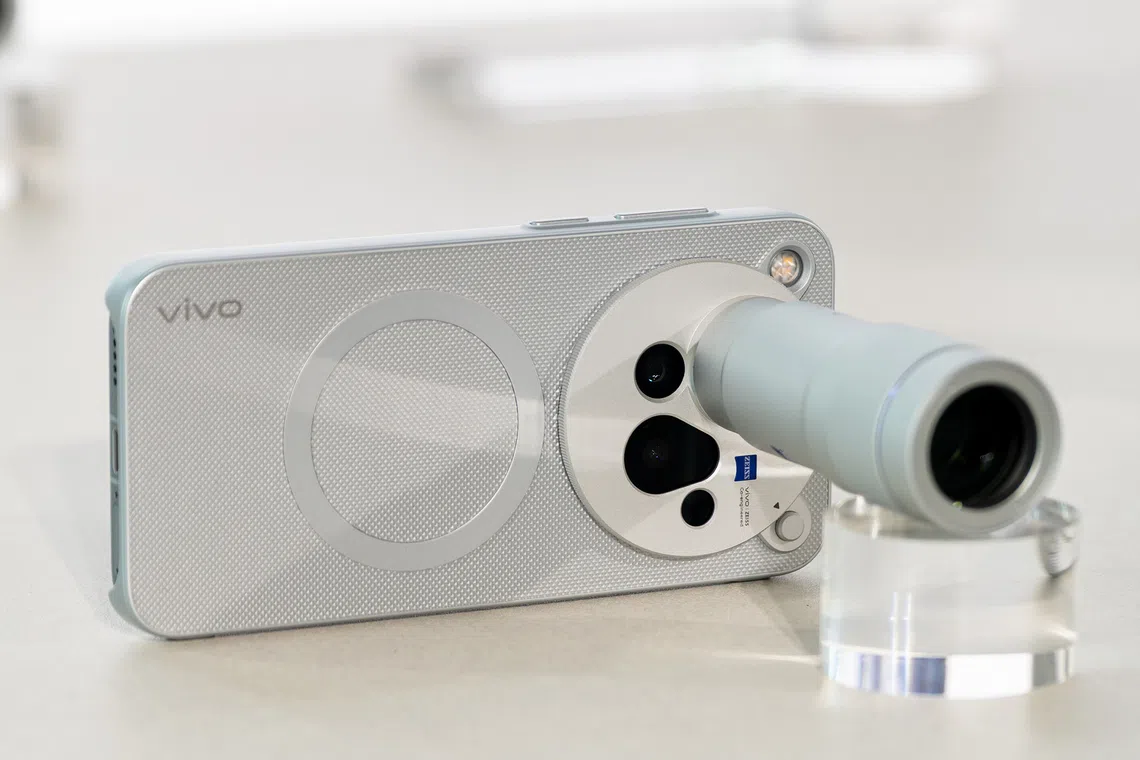
Only the Vivo X500 and X500 Pro Max are coming to Singapore’s shores. Pre-order and pricing details within!
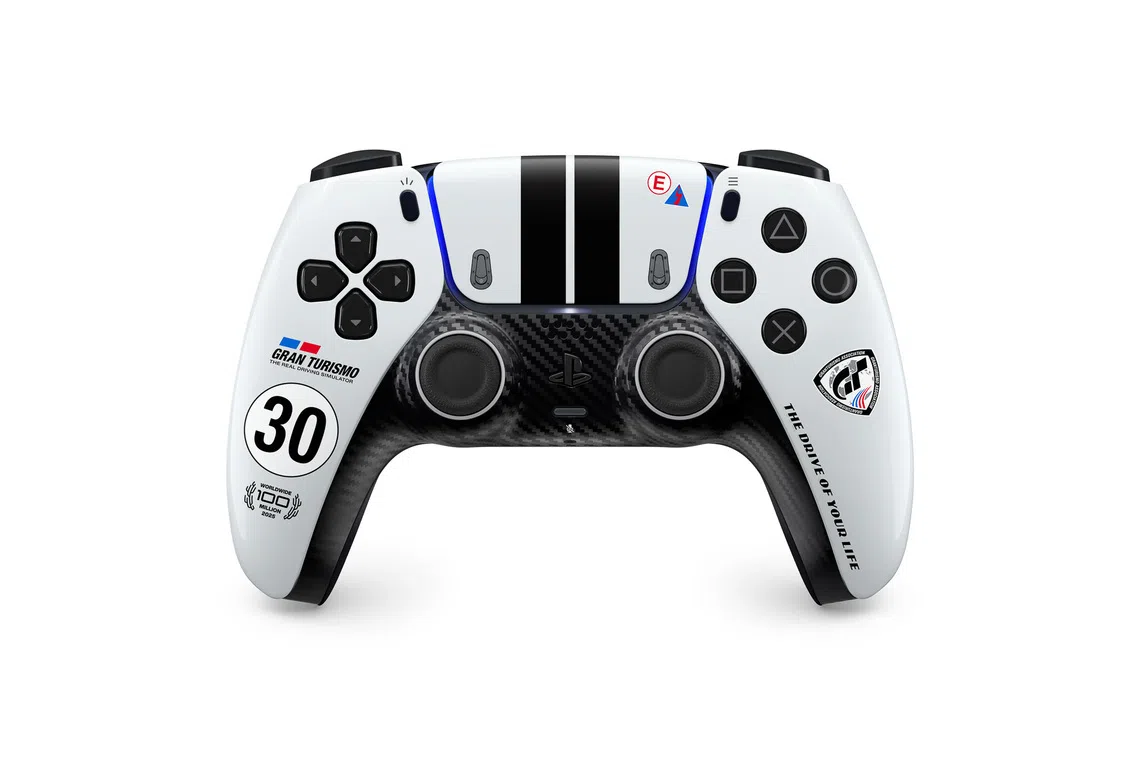
Arriving on 10 December, the cool-looking controller features racing stripes and a textured carbon-fibre-style finish.
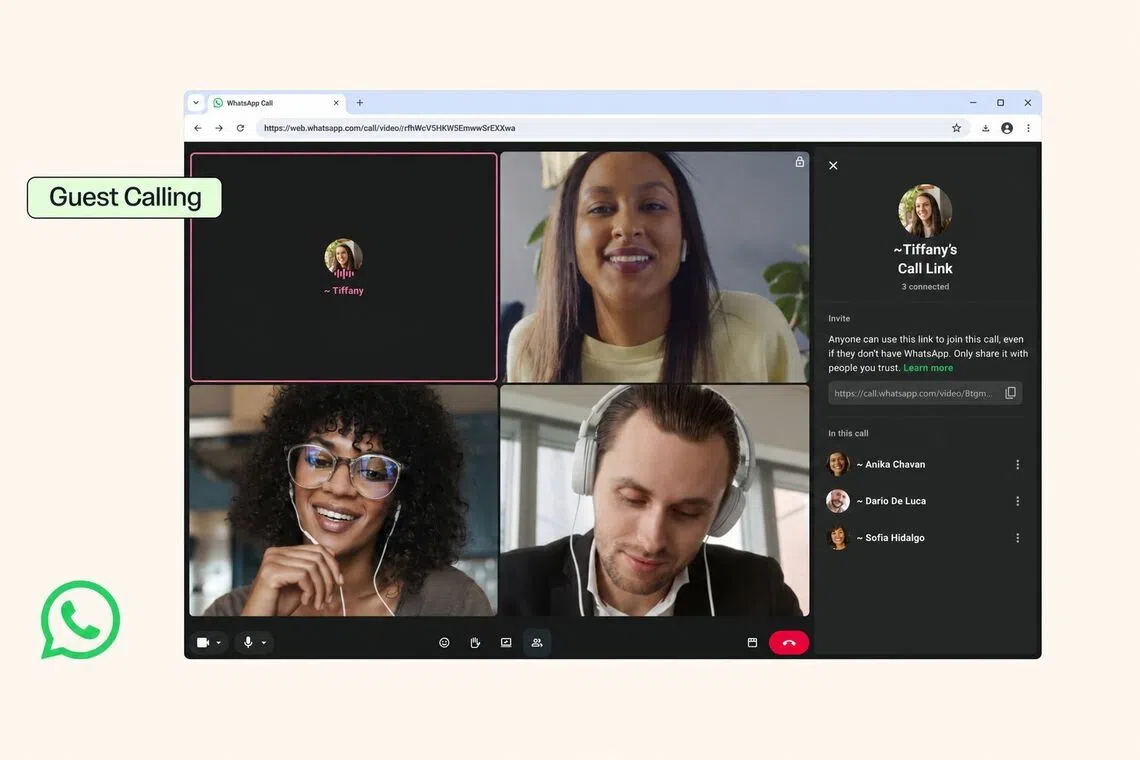
Guests can join through a computer browser, share their screen and keep talking without a time limit.
The growing popularity of Chinese artificial intelligence models has emerged as a key risk factor for Anthropic ahead of its blockbuster initial public offering, according to US research firm Hedgeye Risk Management. “It’s all about Chinese competition when analysing Anthropic,” said Felix Wang, managing director and global tech sector head at Hedgeye. “Many of my clients are asking the same question.” The assessment comes as Anthropic faces renewed investor jitters over whether its massive AI...
Apple hasn’t even got its first foldable iPhone into everyone’s hands, but it may already be doing Samsung’s foldable business a favour.
Oct 20, 2026
Homeplus, which narrowly avoided liquidation and resumed operations in August, is struggling to regain its footing as weak sales and stalled takeover efforts cloud its recovery, according to industry officials Monday. The uncertainty has also prompted a wave of voluntary resignations among employees. A major supermarket chain, Homeplus is currently undergoing court-led rehabilitation after struggling for years with the decline of the country’s hypermarket sector and consumers’ shift to online shopping. In July, the Seoul Bankruptcy Court briefly terminated the proceedings after the embattled retailer failed to secure the minimum 200 billion won ($150 million) in fresh funding needed to carry out its restructuring plan. Homeplus reversed that outcome only after obtaining emergency financing from Meritz Financial Group, its largest creditor, at the last minute. The retailer reopened all 67 of its remaining stores nationwide on Aug. 13, hoping to put its recovery back on track. Sales reached 10.63 billion won on the first day, followed by a daily average of 8.7 billion won over the nex
Creditors of JoongAng Ilbo Co. picked DaouKiwoom-CJ consortium as the preferred bidder for one of the major South Korean newspaper publishers as they closed bidding for the debt-laden company earlier in the day, industry sources said Monday. According to the sources, the DaouKiwoom-CJ consortium beat Orion and four others in a race to take over JoongAng Ilbo, a deal estimated at between 400 billion won ($300 million) and 500 billion won. In July this year, JoongAng Ilbo entered the debt workout program, led by main creditor Hana Bank and other lenders, amid liquidity problems at its parent, JoongAng Group. Creditors' debt collection has been suspended for three months, allowing the company to avoid court-led rehabilitation proceedings. JoongAng Holdings owns a 64.7 percent stake in JoongAng Ilbo and is controlled by the founding family of JoongAng Group.
JINJU, South Gyeongsang Province — Academics explored how entrepreneurs can turn artificial intelligence (AI)-driven disruption into business opportunities and solutions to social challenges at the 2026 Jinju K-Entrepreneurship International Forum. The fourth session, held Tuesday, the second day of the forum, examined how individuals and organizations can navigate uncertainty and turn technological disruption into opportunities through experimentation, resilience and practical problem-solving. Erkko Autio, chair in technology transfer and entrepreneurship at Imperial College London, pointed out that AI has dramatically lowered the technical and financial barriers to developing products, making the products themselves less effective as a source of competitive advantage. “The bottleneck in entrepreneurship was that it required engineering capacity and money. But now AI has collapsed that constraint because anyone can now build whatever they desire,” Autio said. “So the competitive advantage now comes from the entrepreneurial journey, which takes time, and from the product itself t
Recent volatility in Korea’s stock market is adding uncertainty to the listing plans of companies like Musinsa, as a prolonged downturn could weigh on their valuations and dampen demand for new shares, according to industry analysts Tuesday. The benchmark KOSPI has largely declined since falling below 7,000 earlier this month, amid concerns over the sustainability of artificial intelligence (AI) spending and the outlook for the semiconductor industry. On Thursday, the index plunged more than 7 percent, triggering both a sell-side sidecar and a Level 1 circuit breaker, which temporarily halted trading. Such turbulence complicates the initial public offering (IPO) process. Firms must persuade investors that their valuations are justified even as the share prices of comparable listed peers fall. A broader market downturn could also leave newly listed shares trading below their offering prices, eroding their market value soon after they go public. Musinsa is one such candidate, with an estimated valuation of nearly 10 trillion won ($7.53 billion). The country’s largest fashion platform
North Jeolla Province is betting on the National Pension Service (NPS), which manages 1.6 quadrillion won ($1.2 trillion) in assets, to help transform the region into Korea's third financial hub. But while the world's third-largest pension fund has drawn a growing number of asset managers to the region, infrastructure gaps and difficulties in attracting financial talent are raising questions about whether the ambition can become reality, industry officials said Tuesday. Located about 250 kilometers south of Seoul, North Jeolla Province has traditionally been known for its agricultural roots and cultural heritage. That began to change in 2015, when the NPS relocated to Jeonju, the province's largest city. Domestic and foreign asset managers are flocking to Jeonju to deepen ties with the NPS. In June, the NPS began awarding an additional point to asset managers with a presence in Jeonju for selecting investment managers. From global asset managers such as BlackRock, Blackstone, BNY, Franklin Templeton and PIMCO, to domestic players including Mirae Asset, Samsung, Hanwha and KB Asset Manage
Hyundai Motor and Kia will test Level 4 autonomous heavy-duty trucks on real-world logistics routes next year, working with domestic self-driving software companies to develop technology for commercial deployment, the carmakers said Tuesday. The automakers will develop two test vehicles — a hydrogen fuel cell-powered Xcient truck and a conventional Xcient truck — and provide them to partners early next year. Both will feature customized control units and vehicle interfaces designed to integrate autonomous-driving systems. The trials will continue through the end of next year along two routes: a roughly 100-kilometer route combining highways and urban roads, and a 400-kilometer route focused primarily on highway driving. Hyundai Motor and Kia signed an agreement Tuesday with Hyundai Mobis, Hyundai Glovis and two autonomous-driving software developers, Mars Auto and RideFlux, to conduct the tests using the Hyundai Motor Group’s existing logistics network. Mars Auto and RideFlux will install their respective autonomous-driving systems in the trucks, while Hyundai Mobis and Hyundai Glo
Foreign experts accounted for less than 1 percent of research personnel at Korean companies, a report showed Tuesday, with companies identifying visa and related administrative issues as the biggest obstacles to hiring foreign workers in the field. According to the report by the Korea Industrial Technology Association (KOITA), there were 72,224 corporate research and development organizations registered with the association in 2025. Of those, only 1,945, or 2.7 percent, employed foreign researchers. The number of foreign researchers stood at 3,155, accounting for just 0.7 percent of the total research workforce. The number of research and development organizations employing foreign researchers and the number of foreign researchers increased 57.9 percent and 21.4 percent over the past decade, respectively. However, foreign researchers' share of the total research workforce remained virtually unchanged at around 0.7 percent. The report also included a survey of 1,225 companies conducted from Aug. 21 to 28 to assess their experiences with foreign researchers, hiring plans and recruitment c